
From WindsDay Online Publication
Energetic: Out of Politics, Andria McClellan is Helping Us Avoid Long Waits at Railroad Crossings
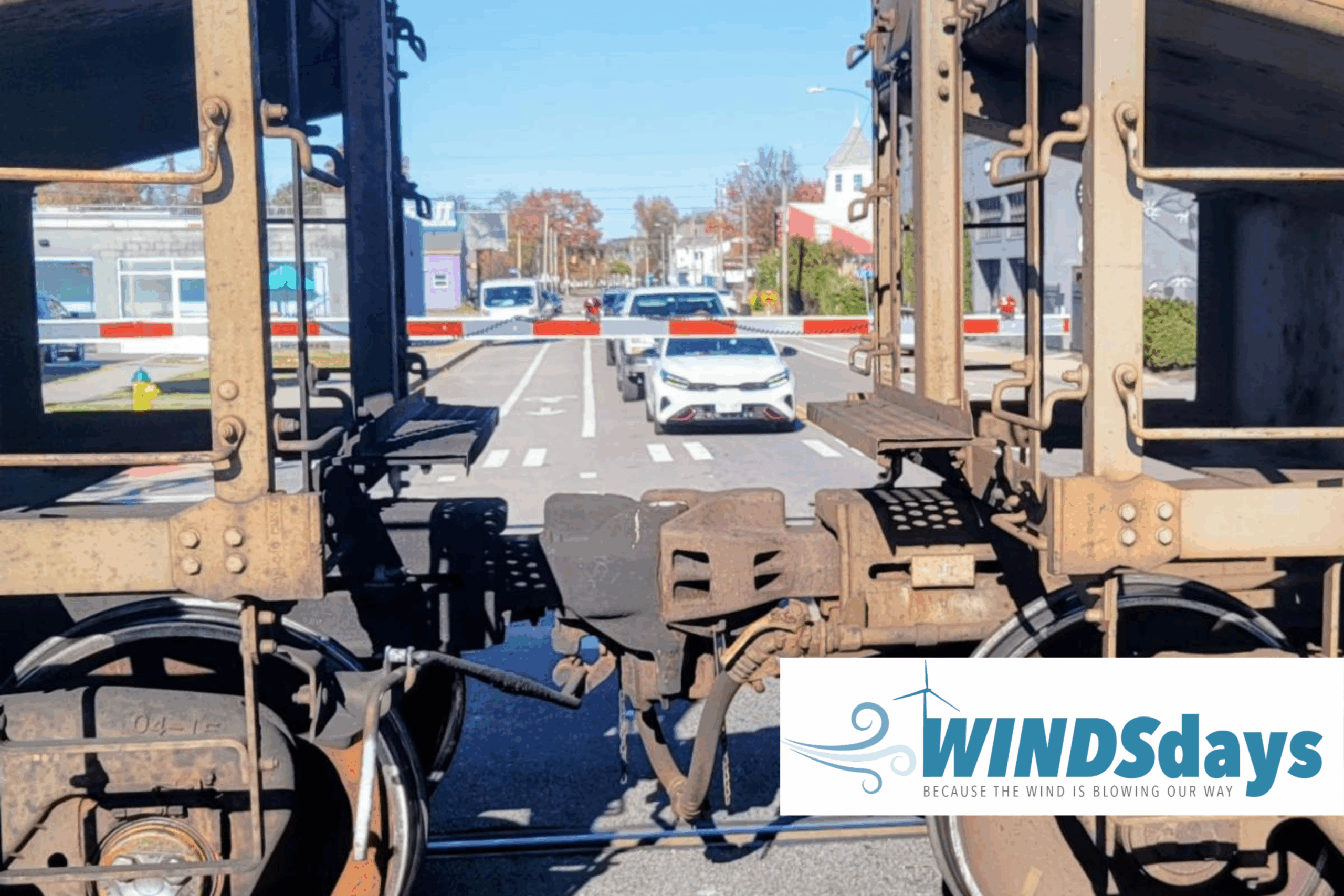
11 times a day (on average), an engine hauling full or empty coal cars to or from the 160-year-old Lambert’s Point terminal (largest in North America) blocks Colonial Avenue at 23rd Street in Norfolk, usually for about eight and a half minutes.
But starting at 1:12pm on a recent Monday, a seemingly endless west bound procession of big metal boxes passed through that intersection, often stopping and even backing up on the tracks.
We left after 40 minutes, joining other motorists who had no advance warning that this train was even in their path, much less how long it would mess up their afternoon. And how long did it? Hold onto your steering wheel. ONE HOUR AND 42 MINUTES! Call Guiness.
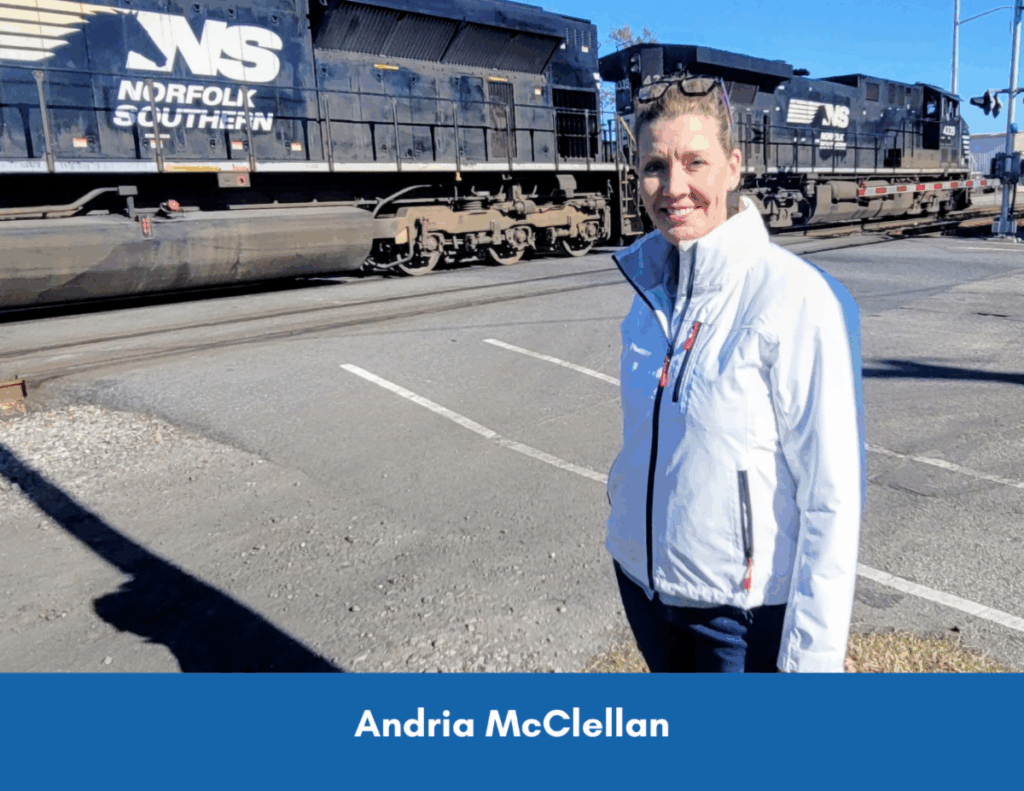
“When I was on Norfolk City Council for eight years, this was the number one complaint of citizens,” says Andria McClellan, whose husband Mike is the Chief Strategy Officer for now Atlanta-based coal-toting railroad giant Norfolk Southern.
“So after choosing to not seek reelection in 2024, I put my energy into devising a technology to inform people that a crossing was blocked.” Jerry Cronin at ODU’s Innovation Center encouraged her to chat with Port Solution Integrators in Portsmouth. “They developed the coding, dashboard and app, and together we launched Oculus Rail this past October.”
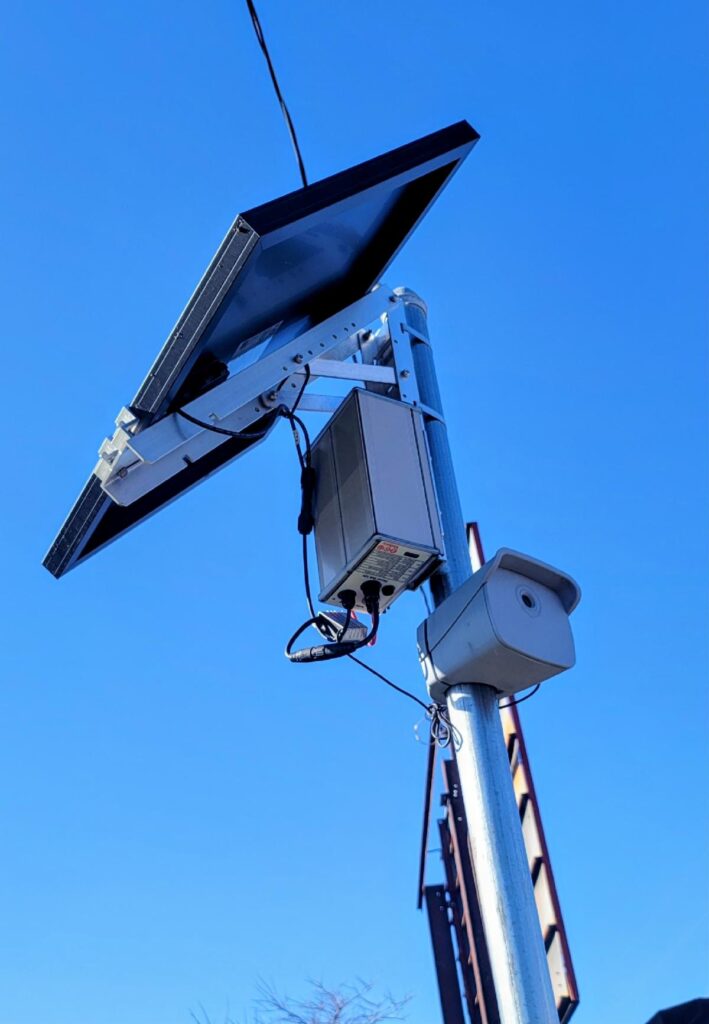
Today, as part of their pilot program, there are solar-powered Oculus Rail sensors at 40 “at-grade” crossings (so far) in Norfolk, Portsmouth, Suffolk and Chesapeake, which has the most such intersections in the state.
“Oculus Rail owns, installs and maintains the sensors in the public right-of-way adjacent to the railroad crossing,” says McClellan. ”As we launch nationally, our business model is to provide a low-cost data subscription for each participating city to have the data for themselves and for Oculus to make it available for free to their citizens.”
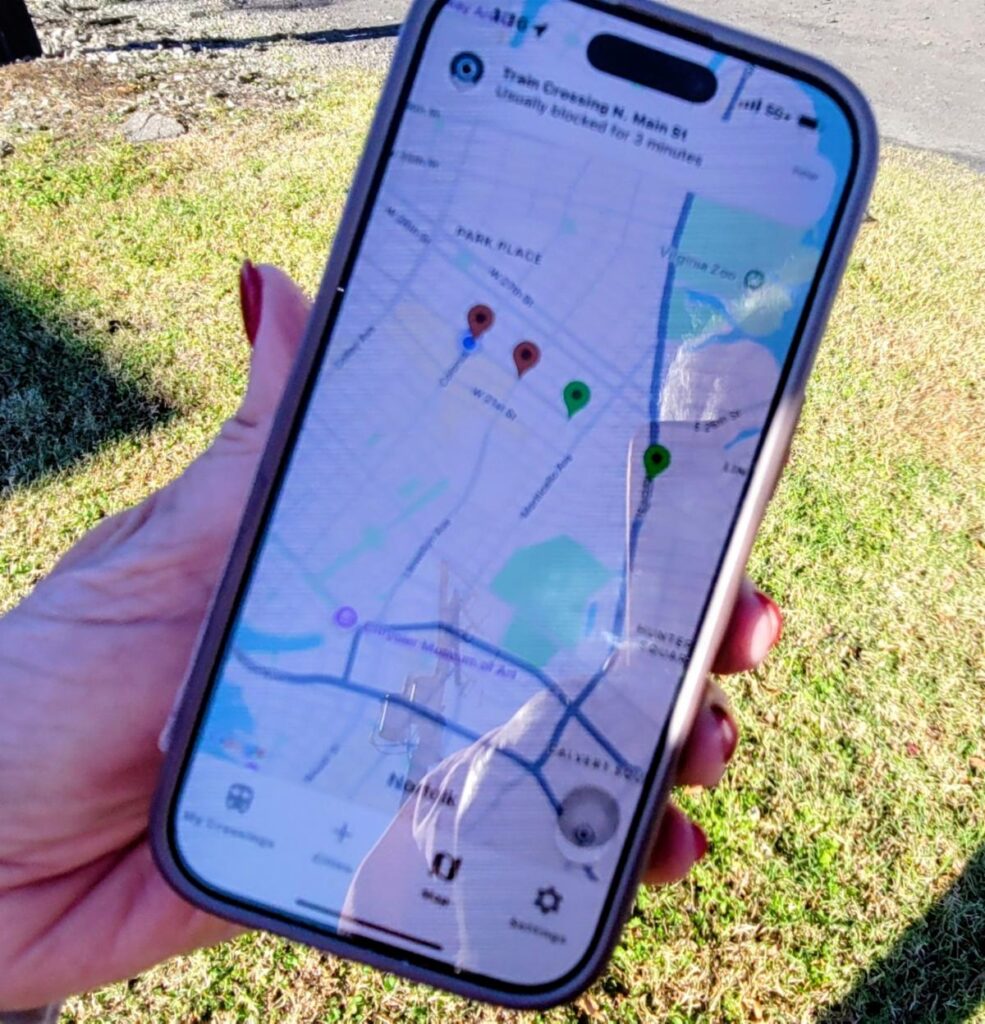
Once aware there’s a blocked crossing, drivers can head to other streets (like Monticello and Colley Avenues) where there are underpasses. Or they can wait and pray that they are at the end, rather than the beginning or middle of the delay.
“The average coal train is almost a mile long,” says the Green Run High and UVA alum who ran unsuccessfully for Democratic nominations for State Senate and Lieutenant Governor and now chairs the Southside (Broadband) Network Authority. “Some are twice that.”
Oculus Rail, a first of its kind innovation, is just getting started. “We hope to improve the technology to predict a train’s arrival at a crossing and how long you will most likely wait for it to pass,” says McClellan, who says public safety is yet another beneficiary of the invention.
“Firetrucks and ambulances need this information as do pedestrians, some of whom I’ve seen climb between stopped train cars to the other side. That can be very dangerous.”
So, downland the app and watch for alerts. Your life may not depend on it, but when you’re rushing to pick up your child or make a business meeting, Oculus Rail can be better than GPS.
WINDSdays is the new name for Wednesdays in Virginia Beach and Hampton Roads. An energetic group of citizens is leading a movement to build a culture around clean energy, a green environment, and the power of wind, all inspired by a large offshore wind project off the coast of Virginia Beach. To learn more, visit Windsdays online.
